Athletic scholarships in the USA for athletes from Kazakhstan
For athletes from Kazakhstan the road to a US university is shorter than it looks: tests are taken at home and visas are issued in Astana and Almaty. Here are the steps and the details.
The NextLane team
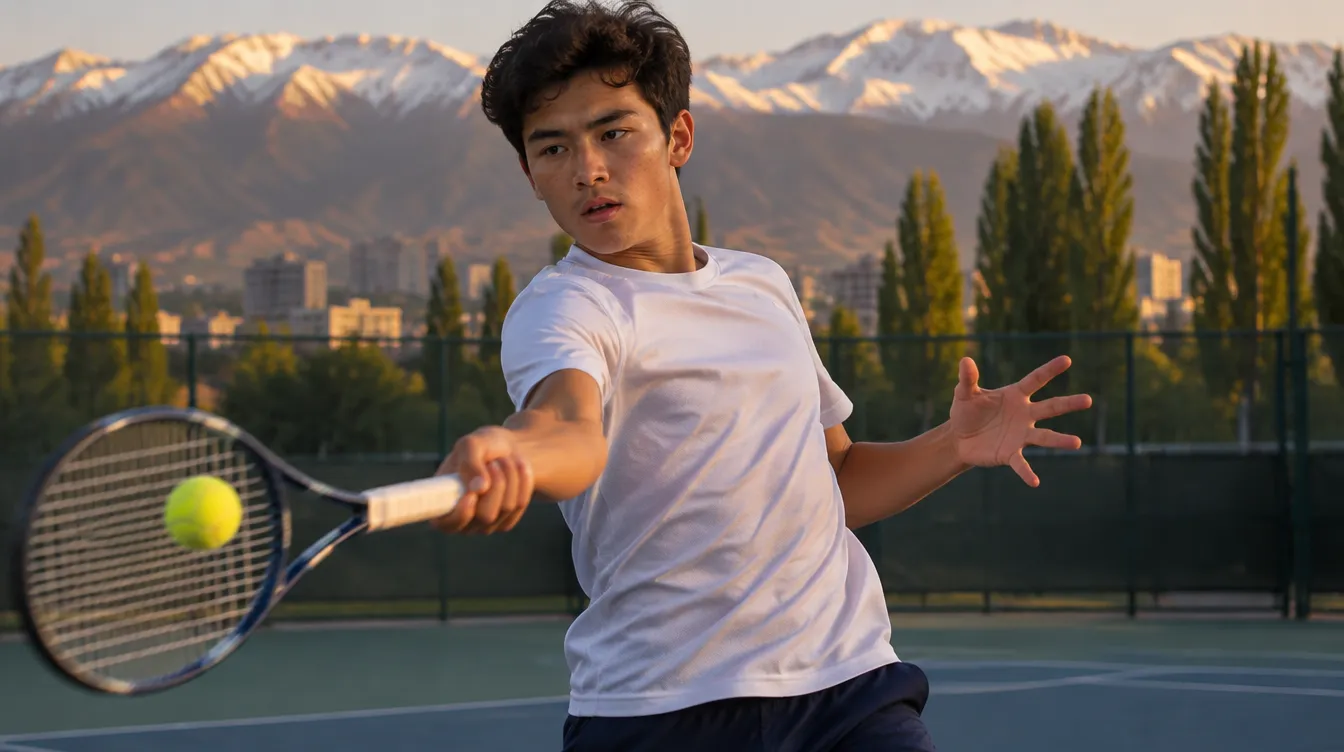
For an athlete from Kazakhstan, an athletic scholarship is the most realistic way to study at an American university for free or close to it. US coaches recruit on level, English tests can be taken at home and visas are issued in Astana and Almaty. Here is the whole path and what matters specifically for athletes from Kazakhstan.
How an athletic scholarship works
American universities run sports teams, and their coaches look for players, including abroad. If a team needs you, the university covers part or all of the cost of study: tuition, housing, meals and books. Scholarships can be full or partial, and athletic aid is often combined with academic aid.
Scholarships are offered in three college leagues: the NCAA (Divisions I and II), the NAIA and the NJCAA. NCAA Division III gives no athletic scholarships, only academic grants. How the leagues differ, and where a scholarship is easiest to get, is covered in NCAA vs NAIA vs NJCAA.
The path to a scholarship in five steps
- Assessing your level. We compare your results with real US rosters and choose realistic leagues.
- Grades and English. Your school grades and English test decide which universities can admit you.
- Profile and video. Coaches always watch video and check results before they get to know a player.
- Coach contact and offers. Coaches make scholarship offers, which you then compare by their real cost.
- Documents and visa. The university issues an I-20, and you apply for an F-1 student visa.
It is best to start 12 to 18 months before you want to begin. The US academic year starts in August, and coaches plan rosters ahead.
School certificate and grades
A Kazakh school certificate is accepted. It is translated into English, and for NCAA Divisions I and II the NCAA Eligibility Center converts your five-point grades in core subjects to the US scale. The minimum is a 2.3 GPA out of 4 for D1 and 2.2 for D2, roughly a 3.3 on the five-point scale.
Grades from the upper years count, so keep them up from year 9. Excellent grades, for example an Altyn Belgi, also unlock academic aid, which is added to athletic aid and brings the final cost down noticeably.
Graduates of NIS, lyceums and schools with advanced English usually have an easier time: their English is already strong and they need less time to prepare for the test.
English: where to take a test in Kazakhstan
Kazakhstan makes this easier than many neighbouring countries:
- Almaty and Astana have TOEFL and IELTS centres;
- the Duolingo English Test is taken online from home, and many US universities accept it.
The test and score you need depend on the university. So we choose the test to fit your college list: sometimes Duolingo is enough, sometimes it has to be TOEFL or IELTS.
The F-1 visa in Astana and Almaty
F-1 student visa interviews are held at the US Embassy in Astana and the US Consulate General in Almaty. Keep in mind:
- book as soon as you receive your I-20: queues grow in summer, and classes start in August;
- set your social media to public. Since 2025 all F-1 applicants are asked to make their accounts public for the vetting;
- prepare your documents: the I-20, proof of the SEVIS fee payment, the scholarship offer and proof that your family can cover the remaining costs.
Student visas are issued to citizens of Kazakhstan in the normal way. We check the embassy's current rules before booking.
Which sports have the best prospects
Athletic scholarships most often go to tennis players, swimmers, volleyball and basketball players, track athletes and footballers. Kazakhstan has a strong tennis school, and US coaches know the level of Kazakh juniors.
US colleges have wrestling, in the collegiate style that is close to freestyle. Judo, boxing and kazakh kuresi are not college sports, so athletes in those sports cannot earn a scholarship in them.
How NextLane helps
We guide an athlete through the whole path, from the first assessment to the move to the USA:
- An honest assessment of your level. We compare your results with real rosters and tell you which leagues are realistic.
- Colleges that fit your goals. We shortlist schools across Division I, Division II, the NAIA and the NJCAA by your athletic level, but also by your academic goals, your family's budget and what you want to achieve in four years.
- Choosing a major. We help you decide on a field of study and check that it is offered at the colleges on your list.
- We handle all communication with coaches. We write to coaches, prepare you for calls, advise you on what to say and how, and negotiate to get the largest scholarship possible.
- Comparing offers. We work out what your family will actually pay for each option, after athletic and academic aid.
- Every admission question. Translations, choosing the English test, the NCAA Eligibility Center, booking the visa in Astana or Almaty: we help at every step.
- All the way to the move. We stay with you until you arrive on campus.
Our founders went through US college sport themselves. If you want to know what scholarship you could get, apply here for a free assessment. For other ways to study in the USA at low cost, read how to study in the USA for free.
FAQ
Nonimmigrant visa interviews are held at the US Embassy in Astana and the Consulate General in Almaty. Book as soon as you receive your I-20 from the university, because queues grow in summer.
Almaty and Astana have TOEFL and IELTS centres, and the Duolingo English Test is taken online from home. Which test and score you need depends on the university, so we choose the test with your college list in mind.
Yes. The certificate is translated into English and the NCAA Eligibility Center converts the five-point grades itself. For Divisions I and II, grades in core subjects in the upper years matter, so keep them up from year 9.
Scholarships most often go to tennis players, swimmers, volleyball and basketball players, track athletes and footballers. US colleges also have wrestling, in the collegiate style that is close to freestyle; judo and boxing are not college sports.
Ready to take the first step?
We will go through your situation for free: sport, level and the real admission options.