American schools and sports academies for young athletes
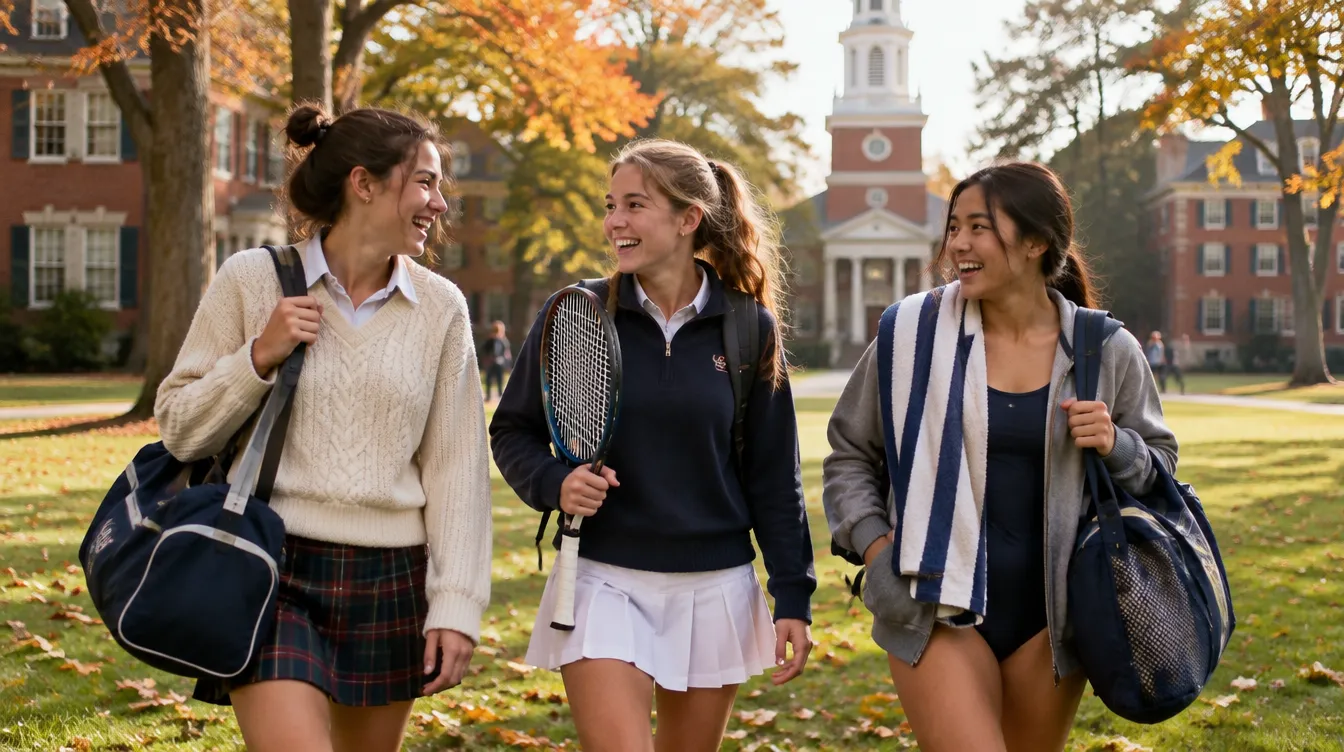
Many families do not wait for graduation and send their child to the USA at 14–17. We help you choose the format and the school, get admitted and get the visa, then guide the athlete to a college scholarship.
- Age
- 14–18
- Grades
- 9–12 + PG year
- Visa
- F-1
- Cost
- from ~$25k a year
What an American school gives before college
Fluent English
After a year or two at an American school, students speak, study and take exams in English with ease.
A US diploma
It makes the NCAA Eligibility Center review and college admission simpler.
Sport in front of coaches
School teams, club events and competitions where college coaches recruit.
A gentle start
By college, the athlete already knows the system, lives independently and does not lose the first year to settling in.
Four ways to study in the USA
Approximate cost per year. We work out the exact figure for each school.

$25–50k a year
Private school + host family
A private day school and life with an American family. The most affordable option and the fastest English.
Learn more →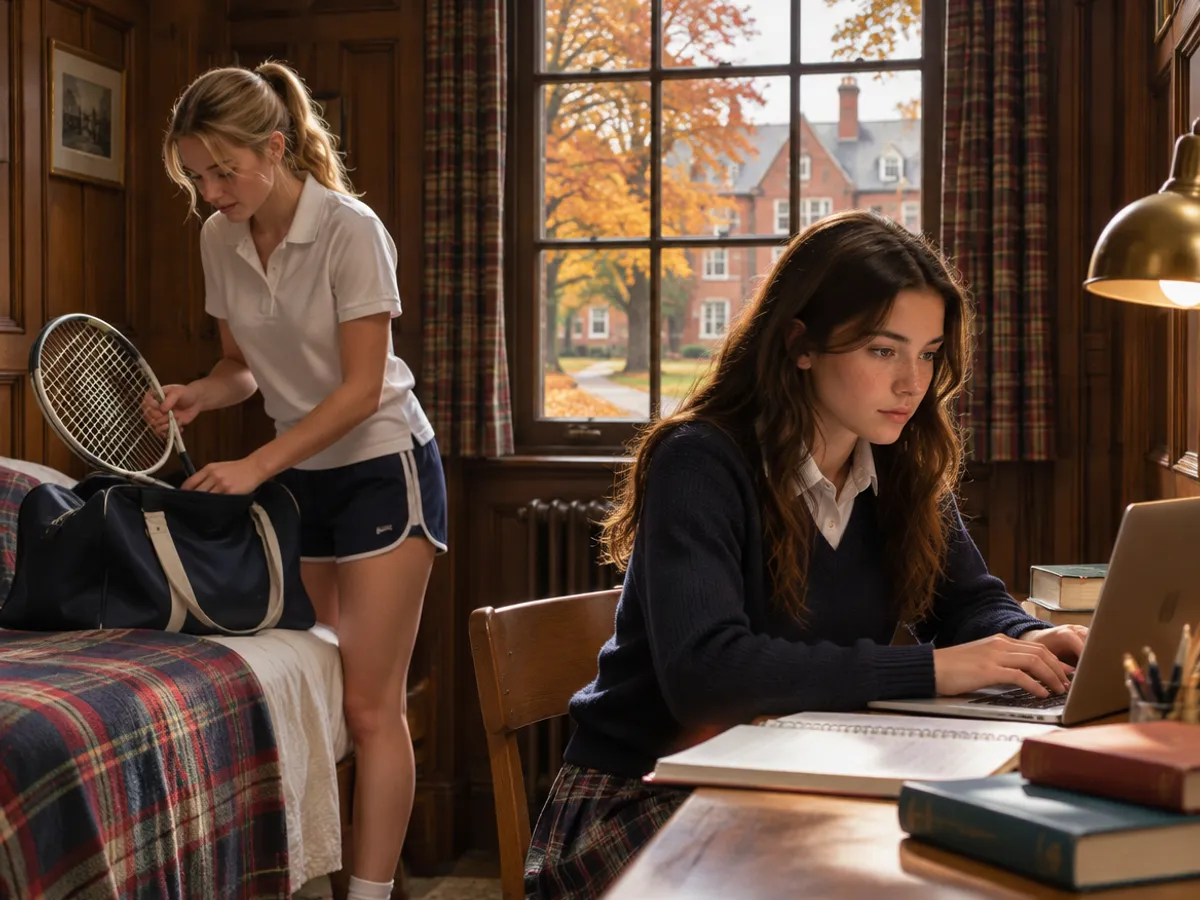
$60–90k a year
Boarding school
Classes, dorms, meals and sport on one campus, with adult supervision around the clock.
Learn more →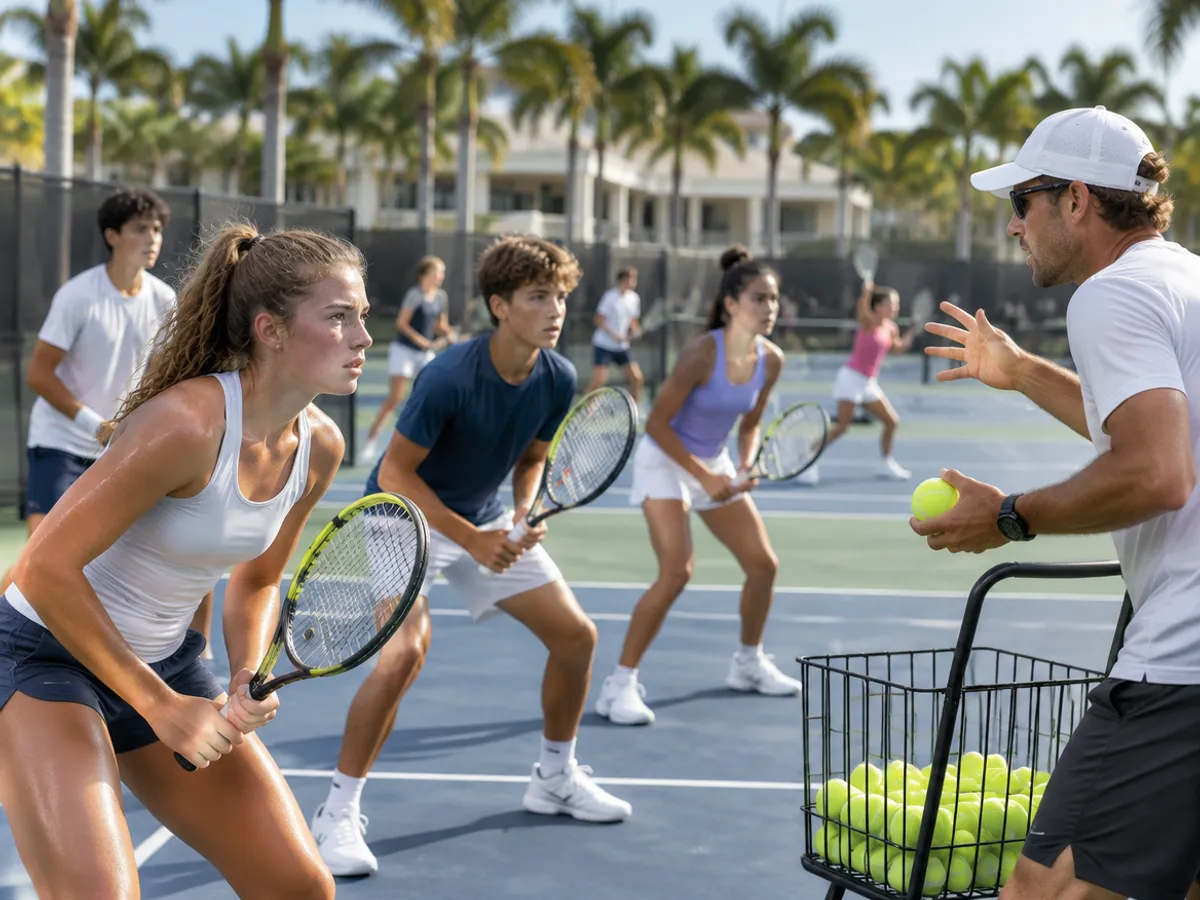
$60–100k a year
Sports academy
A boarding school built around sport: two sessions a day and constant attention from college coaches.
Learn more →
as a year at the school
Post-graduate year
A year at an American school after finishing school at home: one more season in front of coaches.
Learn more →
The formats compared
| Format | Cost per year | Lives | Best for |
|---|---|---|---|
| Private school + host family | $25–50k | With a host family | Independent students training at a club |
| Boarding school | $60–90k or more | On campus | Those who want academics and 24/7 care |
| Sports academy | $60–100k | On campus | Those who put sport first |
| PG year | As a year at the school | Usually on campus | Graduates who need one more season |
Rough figures that depend on the state, the school and the sport. Flights, insurance, equipment and events are extra.
The price on a school’s website is not what families pay
Almost every US private school and academy offers need-based financial aid: a discount that depends on the family’s income. The fee on the school’s website is the full price, and many families pay noticeably less.
- The financial aid application is submitted separately from the school application.
- In it the family lists income and expenses, assets, the number of children, what it spends on their education and how much it can pay for school.
- The school reviews the application and most often gives a discount of 20 to 50%. More is rare.
- If the family’s income is high, aid may be declined.
- We help with the application and work out what each school on the list will actually cost.
Well-known schools and academies
Examples of schools with strong sport that accept international students. We always choose for your child and your sport.
IMG Academy
Bradenton, Florida
The best-known multi-sport academy in the USA. Swimming opens in fall 2027.
The Bolles School
Jacksonville, Florida
A legend of school swimming: 67 Olympians and decades of straight state titles.
Saint Andrew’s School
Boca Raton, Florida
A Florida boarding school with strong swimming, coached by a Swimming Hall of Fame inductee.
Mercersburg Academy
Mercersburg, Pennsylvania
A classic boarding school with an Olympic swimming tradition and a 50 m pool.
Montverde Academy
Montverde, Florida
A basketball powerhouse with 8 national high school titles, plus strong soccer and tennis.
Saddlebrook Preparatory School
Wesley Chapel, Florida
A school at the Saddlebrook resort for tennis players and golfers: 43 courts and two golf courses.
Northfield Mount Hermon
Massachusetts
A New England boarding school: 38 teams, a PG year and a quarter of students from abroad.
From choosing a school to college
- 01
Assessment and format
We assess your child’s level, English and the family budget and suggest a format: host family, boarding, academy or PG year.
- 02
A list of schools
We shortlist schools with a strong programme in your sport and check the level of the team and coach.
- 03
Admission
We prepare documents, tests and interviews, and contact the schools’ coaches.
- 04
Visa and the move
The school issues an I-20, we prepare you for the F-1 visa interview and help with the move.
- 05
The road to college
We plan the school years so that by graduation the athlete has the English, grades and results, and guide them to a scholarship.
Two swimming families are already on this path
We are currently guiding two families whose young swimmers are joining US sports academies. So we know what to look at when choosing: the real level of the coaches, the training schedule, how many graduates make college teams and what the fee actually includes.
Frequently asked questions
Yes. Almost all offer need-based financial aid, a discount that depends on family income. The aid application is separate from the school application, and schools most often give 20 to 50%. If the family’s income is high, aid may be declined.
Most international students join high school, grades 9–12, at ages 14–17. Some boarding schools also accept students from grades 7–8.
Only to a limited extent. On an F-1 visa, a student may attend a public high school for no more than 12 months and must pay the full cost. J-1 exchange programmes also last a year and do not let you choose the school or the sport. That is why athletes almost always go to private schools.
Yes. Your child becomes fluent in English, earns a US diploma and competes in front of American coaches. It does not guarantee a scholarship, though: athletic level and the right school still decide it.
Most private and boarding schools take applications until January–February for a September start. It is best to start preparing a year before the intended start.
Yes. We work with families from Russia, Kazakhstan, Kyrgyzstan, Uzbekistan, Ukraine and the rest of the CIS, as well as from Europe.
Let’s talk about a school for your child
We will go through your situation for free: sport, level and the real admission options.