
Boarding schools in the USA for young athletes
Classes, housing, meals, training and adult supervision on one campus. The calmest option for a family, and strong academics alongside sport.
- Cost
- $60–90k a year
- Grades
- 9–12, some from 7
- Living
- On campus
- Applications
- By January–February
What a boarding school is
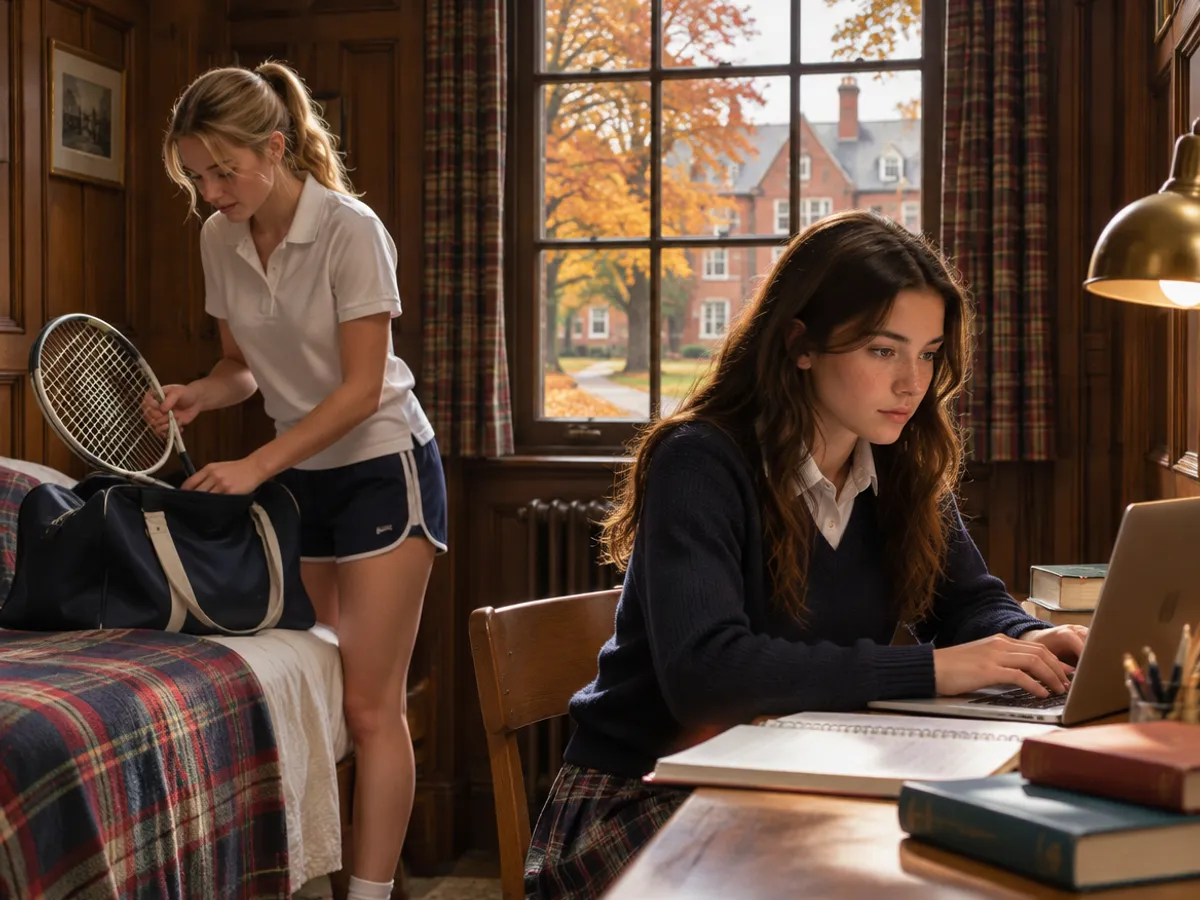
A boarding school is a private school where students live on campus. Classes, dormitories, meals, training, health care and adult supervision are all in one place. For an international student it is the clearest and calmest option: parents know their child is looked after around the clock.
American boarding schools teach grades 9 to 12, some accept students from grades 7–8, and many offer a post-graduate year, an extra year after finishing school.
What a day looks like
- Morning: classes in small groups, usually 10–15 students. Teachers often live on campus and know every student personally.
- Afternoon: compulsory sport. At most boarding schools every student plays a sport each season: fall, winter and spring.
- Evening: dinner, supervised study hall and free time in the dorm.
- Weekends: games and competitions, trips and events. Many schools are designed for students who stay on campus at weekends.
Sport at a boarding school
At an American boarding school, sport is part of the programme, not an extra. Teams compete against other private schools in their leagues, and the strongest schools are known for sending graduates to NCAA college teams.
But the level varies a lot from school to school. At one school the swim team trains twice a day and races at national meets; at another it is closer to a recreational club. So choose a school by the level of the team and the coach in your sport, not by an overall ranking.
If a school has no strong team in your sport, it is sometimes possible to combine school with a local club, which is common for swimmers and tennis players.
What it costs
Roughly $60,000–90,000 a year, and more at the best-known schools. That usually covers tuition, housing and meals. Flights, insurance, equipment, travel to events and pocket money are extra.
Many boarding schools offer financial aid, including to international students, but you apply for it together with admission, and places are limited.
Who it suits
- families for whom safety and 24/7 supervision come first;
- students who want strong academics alongside sport;
- those who want to adjust to life in the USA gradually, surrounded by peers.
Admission
Boarding schools usually take applications until January–February for a September start. You need recent grades, teacher recommendations, an English test (TOEFL, Duolingo or the school's own test), sometimes the SSAT entrance test, and always an interview. Athletes should contact the school's coach early and send results and video.
Once admitted, the school issues an I-20 and the student applies for an F-1 student visa.
The price on a school’s website is not what families pay
Almost every US private school and academy offers need-based financial aid: a discount that depends on the family’s income. The fee on the school’s website is the full price, and many families pay noticeably less.
- The financial aid application is submitted separately from the school application.
- In it the family lists income and expenses, assets, the number of children, what it spends on their education and how much it can pay for school.
- The school reviews the application and most often gives a discount of 20 to 50%. More is rare.
- If the family’s income is high, aid may be declined.
- We help with the application and work out what each school on the list will actually cost.
Frequently asked questions
Roughly $60,000–90,000 a year for tuition, housing and meals, and more at the best-known schools. Flights, insurance and events are extra. Many boarding schools offer financial aid, including to international students.
It varies a lot. Some schools compete nationally and send graduates to the NCAA; at others sport is recreational. So we choose by the level of the team and coach in your sport.
Grades, teacher recommendations, an English test, sometimes the SSAT and an interview. Applications usually close in January–February for a September start.
Let’s talk about a school for your child
We will go through your situation for free: sport, level and the real admission options.