A private school and a host family in the USA
The student attends an American private school and lives with a host family. It is usually much cheaper than boarding, and English improves fastest.
- Cost
- $25–50k a year
- Age
- 15–17
- Living
- Host family
- Visa
- F-1
How it works
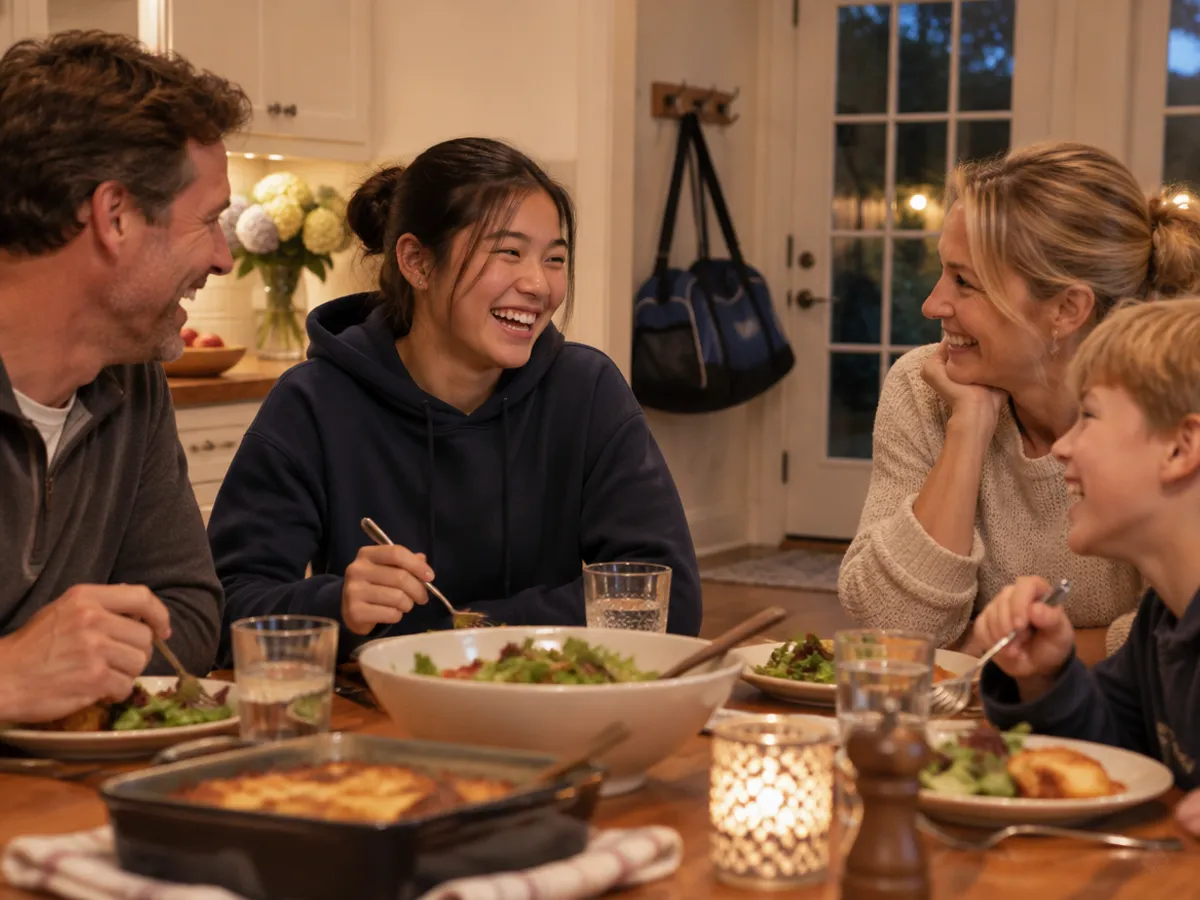
The student attends a private day school and lives with an American host family. After classes and practice they go "home": dinner with the family, homework, weekends and holidays together.
The family is found by the school or a specialist organisation. Families are vetted, and the student has a local coordinator to turn to with any problem.
What living with a host family includes
- a private room or one shared with the family's child;
- meals at home;
- transport to school, and often to practice;
- being part of family life: holidays, trips, weekends.
A host family is neither staff nor a hotel. The student follows the house rules, helps around the home and becomes part of the family. For many it is the fastest way to become fluent and understand American life.
Sport
Day schools have teams too, and strong private schools have good coaches. But in many sports the most important things in the USA happen in clubs: swimming, tennis, volleyball, soccer and basketball revolve around club teams and events that college coaches attend.
So it matters where the student will train and who will drive them there. The ideal is a school and club close together and a family willing to help with transport.
What it costs
Roughly $25,000–50,000 a year: private school tuition plus the host family fee and coordinator services. Club training, events, flights and insurance are extra.
That is usually much less than boarding, which is why many families from the CIS and Europe choose this option.
Pros and cons
Pros:
- cheaper than boarding;
- English improves faster, because only English is spoken at home;
- more freedom to choose a club for your sport.
Cons:
- a lot depends on the particular family;
- no 24/7 supervision as at a boarding school;
- travel to practice can take a lot of time.
Who it suits
Independent teenagers aged 15–17 who want to become fluent quickly and train with a strong club outside school. Swimmers, tennis players and volleyball players take this route especially often.
The visa
A private school requires an F-1 student visa: the school issues an I-20 and the student has an interview at a US embassy. On an F-1, a public high school is limited to 12 months at full cost, so for longer stays families choose a private school.
The price on a school’s website is not what families pay
Almost every US private school and academy offers need-based financial aid: a discount that depends on the family’s income. The fee on the school’s website is the full price, and many families pay noticeably less.
- The financial aid application is submitted separately from the school application.
- In it the family lists income and expenses, assets, the number of children, what it spends on their education and how much it can pay for school.
- The school reviews the application and most often gives a discount of 20 to 50%. More is rare.
- If the family’s income is high, aid may be declined.
- We help with the application and work out what each school on the list will actually cost.
Frequently asked questions
The school or a specialist organisation. Families are vetted, and the student has a coordinator to turn to with any problem.
Yes, and in many sports that is the key: swimming, tennis, volleyball and soccer in the USA revolve around clubs. Choose a school and club close together and a family willing to help with transport.
You pay day-school tuition and a host family fee rather than for a campus with 24/7 supervision. Usually $25,000–50,000 a year against $60,000–90,000 for boarding.
Other formats
Let’s talk about a school for your child
We will go through your situation for free: sport, level and the real admission options.